Erin Joyce and Robin Brune, veteran prosecutors in the Office of Chief Trial Counsel, lay out the case against Chief Trial Counsel Jayne Kim:
Last week, another veteran State Bar employee, investigator John Noonen, was fired. Noonen had filed a “whistleblower” complaint against the Chief Trial Counsel. Noonen is represented by Mark Geragos, who also represents Senator Joseph Dunn, whose wrongful termination lawsuit is headed to arbitration.
The second Commission should also be guided in its task by the principle that the [California Rules of Professional Conduct’s} historical purpose is to regulate the professional conduct of members of the bar, and that as such, the proposed rules should remain a set of minimum disciplinary standards. While the second Commission may be guided by and refer to the American Bar Association’s Model Rules of Professional Conduct when appropriate, it should avoid incorporating the purely aspirational or ethical considerations that are present in the Model Rules and Comments.
Not everyone got the memo. Consider this language:
In the management and operation of a law practice and in order to understand and properly protect and promote the public interest, members must engage in and promote a diverse and inclusive legal profession and practice. A diverse, inclusive and nondiscriminatory legal profession can be created and maintained through community engagement, strategic partnerships, education on access, fairness and the elimination of bias and by supporting a practice that reflects and is representative of the public and client community to be served.
This language is proposed as an addition to a new version of Rule of Professional Conduct 2-400, Prohibited Discrimination in Law Practice Management and Operation, to be re-numbered as new rule 8.4.1(c). The proposed language comes from the State Bar’s Council on Access & Fairness (COAF), a State Bar organ charged with “implementing the State Bar goals and strategies for increasing diversity in the legal profession and the elimination of bias in the practice of law.” COAF also proposed in a letter to RRC2 dated October 26, 2015, that “existing Rule 2-400 be updated to reflect current employment protections under the Fair Employment and Housing Act (Gov. Code, § 12900 et seq.) (FEHA) and public accommodations protections under the Unruh Civil Rights Act (Unruh Act) (Civ. Code, § 51 et seq.).”
Rule 2-400 is an interesting rule. No lawyer has ever been disciplined for violating it. It was enacted at the direction of the Legislature. While it was duly approved by the California Supreme Court in 1994, the drafters drafted it is such a way as to make it very unlikely that anyone would ever be subject to discipline for violating it. Rule 2-400 currently provides:
No disciplinary investigation or proceeding may be initiated by the State Bar against a member under this rule unless and until a tribunal of competent jurisdiction, other than a disciplinary tribunal, shall have first adjudicated a complaint of alleged discrimination and found that unlawful conduct occurred. Upon such adjudication, the tribunal finding or verdict shall then be admissible evidence of the occurrence or non-occurrence of the alleged discrimination in any disciplinary proceeding initiated under this rule.
At its November 13 meeting the Second Commission for the Revision of the Rules of Professional Conduct (RRC2) there was as strong consensus to remove this language, on the theory that this language is preventing enforcement of the rule. This would open the door to discipline proceedings based on complaint without a prior civil adjudication. There was apparently no discussion of whether this rule is even needed.
Discrimination is a social evil that has been addressed by the civil law through statutory weapons like FEHA and Unruh Act, just as other social evils have been. Rules of Professional Conduct are not designed to address social evils; they are yardsticks by which we measure the fitness of lawyers to practice. Larding them up with a mission not related to that core function makes little sense. Nonethless, a few states have added disciplinary rules that address discrimination in employment or use of discriminatory language in advocacy, None have gone where the proposed new 2-400(b)(2) goes:
(b) In the management or operation of a law firm, a lawyer shall not unlawfully discriminate or knowingly permit unlawful discrimination on the basis of race, national origin, sex, sexual orientation, religion, age, or disability in:…(2) accepting or terminating representation of any client.
It is unknown whether this will deter discrimination by lawyers. What is certain is that it will create a whole new class of potential disciplinary culpabability that will require intense litigation. I have represented lawyers who represent people in employment discrimination claims. It is a volatile clientele where issues regarding mental health are often involved. Many lawyers and especially these lawyers will now face the possibility of a State Bar complaint from the mentally ill ex-employee whose case they rejected as untenable or who became so difficult to work with that the lawyer withdrew. Discrimination is also a document heavy and witness heavy practice because proving discrimination is not easy and must often be done by creating a mosaic of many bits of evidence that show the discriminatory animus. Proving it by the required burden of clear and convincing evidence will almost always be extremely time consuming and in most cases, probably impossible.
The State Bar Court, in a rare communication to RRC2, points out that the recently streamlined State Bar Court process, streamlined to eliminate both the formal rules of evidence and most discovery as a matter of right, is singularly unsuited to litigating discrmination claims which it might be called upon to do if the condition preedent of a civil finding is eliminated.
By contrast, the Chief Trial Counsel, in a display of the same “can-do” attitude that informed the now infamous backlog reduction project, assures RRC2 that OCTC is up to the task of enforcing whatever rules you want them to enforce. They might want to look at this video when evaluating that claim:
Adopting the proposed Rule 2-400(B)(2) will not address the social evil of discrimination and will result in many employment lawyers having to respond to frivolous discrimination complaints made to the State Bar, complaints that will mosly be unprosecutable. It will create new work for already overworked attorneys and investigators at the State Bar. And new work for discipline defense counsel; the evil gremlin inside me who guards the fisc is grinning as I write.
No one, outside of a single public commentator, is asking why we need this Rule. Perhaps the theory is that the mere existence of the Rule will serve as deterrant to an attorney who is contemplating committing discriminatory conduct. Given the relatively low level of awareness regarding existing Rule 2-400, this seems firmly rooted in fantasy but the deterrance fantasy has been invoked before, most recently in the revision of the Standards for Attorney Sanctions for Professional Misconduct (SASPM), where it floated to argue for increased levels discipline for any and all misconduct. But the real world effect may be called “civil litigation by other means.” Damages as such are not available to the complainant in State Bar Court but the opportunity to inflict damage on the respondent lawyer, at little or no cost to the complainant, may be tempting. More work for the discipline system, work that will likely come to nought.
COAF’s proposed language is apparently still awaiting consideration. But other opportunities to promote pure aspiration are on the docket. At its January 2016 meeting, RRC2 will consider a California version of ABA Model Rule 6.1, which provides that “every lawyer has a professional responsibility to provide legal services to those unable to pay. A lawyer should aspire to render at least (50) hours of pro bono publico legal services per year.”
Why will it spend its time doing that in light of the Supreme Court’s explicit direction? Because, despite what the Supreme Court says, the Rules of Professional Conduct are viewed by many as a vehicle for enforcing moral obligations, as opposed to “merely” ethical ones.
Yum!
And perhaps because rule making inevitably becomes an exercise in sausage making in Bismarckian sense. The later impulse to accomodate interests not directly related to the mission of the discipline system proved to be the undoing of the fruit of RRC1. Will it undo the work of RRC2?
The continuing soap opera (or “telenovela” in the words of one discipline defense counsel of long experience) that is the State Bar of California delivered a surprising sequel this last Monday with filing of a 40 page whistleblower complaint by a veteran State Bar investigator and acting manager of investigations against Chief Trial Counsel Jayne Kim. It was leaked by to the Los Angeles Daily Journal just a few days after a plurality of employees in the Office of Chief Trial Counsel voted “no confidence” in Ms. Kim. The complaint alleges that State Bar complaints against new State Bar President David Pasternak were improperly closed by the Office of Chief Trial Counsel instead of being assigned to outside counsel. The whistleblower promises further revelations.-
Poor labor-management relations are not new at the State Bar; the attorney unit in the Office of Chief Trial Counsel went on strike in 1986. But nothing has ever occurred like this outright insurrection. To paraphrase another State Bar discipline defense counsel of long experience, just when you think it can’t get any weirder, it gets weirder.
There are parallels with the State Bar’s situation in 1986. The labor dispute that year was resolved after SEIU appealed to its allies in Sacramento. At the same time, the State Bar was fighting in Sacramento to maintain its existence and keep the disciipline function. The State Bar survived with massive reform of the discipline system under the guidance of Prof. Fellmeth.
At this point speculation about what the next shoe to drop will be is a waste of energy. We can only be sure that there will be a next shoe. After a few decades of close observation, State Bar fatigue starts to set in. Marx said history repeats itself, first as tragedy then as farce. This telenovela reached the second phase some time ago. But the real world tragedy continues.: the important mission of the professional discipline prosecutors is continually impeded by the politics and mismanagement of the State Bar.
So we wait for the next episode with an appropriate sense of dread on the eve of dia de muertos. Manténganse al tanto!
This week is a mixed bag for that peculiar institution, The State Bar of California.
Good news: Dennis Mangers, public member of the Board of Trustees announced that he is going to the serve out the remaining year of his second term on the Board. Mr. Mangers had threatened to resign after a dust-up with incoming President David Pasternak over Mr. Pasternak’s appointments to Board committees, including the powerful Board Executive Committee. He has apparently concluded that he can be a greater force for change by staying on the Board. The Governance reform process created by SB 163 in 2010, is ongoing; the Governance in the Public Interest Task Force (GITPITF), is charged with submitting a report by March 2017 detailing “its recommendations for enhancing the protection of the public and ensuring that protection of the public is the highest priority in the licensing, regulation, and discipline of attorneys.” GITPITF met recently and heard a spirited presentation from Ed Howard from the Center for Public Interest Law (CPIL), who argued that the present Board configuration, where lawyers hold 13 out of 19 seats, is against the “state of nature.” CPIL’s views carry some weight; its director Robert Fellmeth designed the current discipline system in his capacity as the Legislature’s first Discipline Monitor almost thirty years ago.
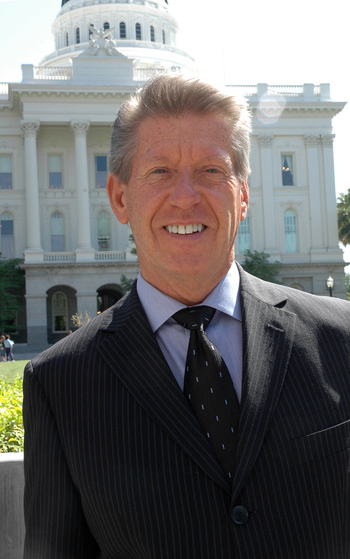
Dennis Mangers
These events occur in the wake of the State Auditor’s report released in June that was highly critical of the State Bar, in part because of the backlog reduction project that sprang from Senator Dunn’s fertile brain in July 2011, after he effectively decapitated the Office of Chief Trial Counsel. The auditor concluded that the push to reduce the backlog “may” have put the public at risk by settling cases for more lenient discipline than merited. At the hearing on the recently signed fee bill, Assembly Judiciary members were not happy. While the fee bill was amended to add transparency measures, compliance the Bagley-Keene open meeting law and the California Public Records Act, the legislators made it clear that they might be open to more sweeping measures in next year’s fee bill. As we move on, this seems more and more likely…
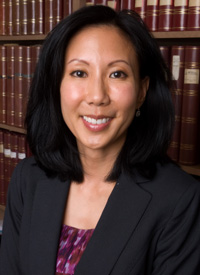
Chief Trial Counsel Jayne Kim
Bad news: the unionized work force in the Office of Chief Trial Counsel (OCTC) voted “no confidence” in current Chief Trial Counsel Jayne Kim. OCTC staff have complained of large caseloads since Ms. Kim was appointed interim Chief Trial Counsel in July 2011, But a whistleblower complaint goes much farther, accusing the Chief Trial Counsel of “disregard of her responsibilities, inadequate performance and dishonesty” citing her alleged attempt to blame a staff member for the misrepresentation of backlog numbers to the Board Regulation and Discipline Committee, and much, much more. While the State Bar’s new executive team is bullish on the Chief Trial Counsel, the tone of this unprecedented attack shows loathing on a scale not previously seen by your observer. Out of 200 employees eligible to vote, 87 voted “no confidence” in Jayne Kim; 27 voted against the measure; 76 chose not to vote at all.
Labor strife is not new at the State Bar. In 1986, OCTC attorneys went on strike. At the same time, the State Bar was fighting for its existence in the wake of exposes published in the San Francisco Chronicle. Both events followed a period of time when the Board of Governors kept bar dues low and underfunded the discipline system to the point of breakdown. Somewhere in the vault of documents leftover from my own days as a union activist is a memorandum from 1983 where discipline prosecutors complain about having to use old scraps of paper to take notes because there isn’t enough money to buy legal pads. The issue of inadequate resources was raised in the State Auditor’s report and it recommended a workforce study which will be done. No close observer of OCTC can doubt that staff has worked its collective ass off for the last four years.
Undertaking an unprecendented backlog reduction after an unprecedented firing of your entire senior staff while you are being deluged with an unprecedented surge of complaints was perhaps not the best management decision. That is three “unprecedenteds” in the same sentence and it cannot be good.
Bad Craziness
But when your pick a politician as your manager based on that person’s imagined political clout, maybe something like this is inevitable. A prophet is, of course, without honor in his own country (“Meet the New Boss“) but the political context surrounds all of this. Yes, the State Bar has an impressive management team in place. But it has been making the same mistakes over and over again for the last forty years. This is deeper than personnel; it about a culture than can only fixed by major structural surgery, a paradigm shift in today’s nomenclature.
Update: The Board of Trustees has voted to approve President Pasternak’s appointments to Board Committees on a divided vote.
The second item on the agenda is the appointment of Board liasions to various State Bar organs, also a perogative of the President (with Board approval, of course.) Board member Joanna Mendoza has moved to delay voting on the appointments; she complains that she nothing to do. That motion has just been defeated on an 8-5 vote. Trustee Krinsky moves to approve President Pasternak’s appointments with changes including appointing Mendoza to some assignments. That motion has just been approved. Mr. Pasternak assures the Board that he has listened to all members comments and that he has to power to change those appointments.
The new Board of Trustees of the State Bar of California held its first meeting of the new Board year on October 11, 2015 at the State Bar Annual Meeting, just down the road from the home of Mickey Mouse. Almost immediately, one very first agenda item, the Board ran into a buzzsaw of controversy . Some things don’t change.
The issue is appointments to chair Board Committees, a perogative of the State Bar President. Some Board members accused incoming President David Pasternak of stacking appointments to Board Committees in favor of Board members who voted for his election against competing candidate Heather Rosing, including appointments to the powerful Board Executive Committee. That election was close, so close that outgoing President Craig Holden cast the tiebreaking vote that elected Mr. Pasternak. Six of his eight proposed appointments to the Ex Comm have gone went to lawyers who voted for his election. His propsed appointments of all seven Board subcommittees are to Trustees who voted
Bad feelings still exist. Part of the controversy is the impact of the recently signed fee bill that imposes the requirement of compliance with the Bagley Keene open meeting acts. Public member Dennis Mangers accused Mr. Pasternak of using Bagley Keene to avoid inclusion. He just threatened to resign and the tone of meeting is turning very ugly.
The new Board of Trustees of the State Bar of California held its first meeting of the new Board year on October 11, 2015 at the State Bar Annual Meeting, just down the road from the home of Mickey Mouse. Almost immediately, one very first agenda item, the Board ran into a buzzsaw of controversy . Some things don’t change.
The issue is appointments to chair Board Committees, a perogative of the State Bar President. Some Board members accused incoming President David Pasternak of stacking appointments to Board Committees in favor of Board members who voted for his election against competing candidate Heather Rosing, including appointments to the powerful Board Executive Committee. That election was close, so close that outgoing President Craig Holden cast the tiebreaking vote that elected Mr. Pasternak. Six of his eight proposed appointments to the Ex Comm have gone went to lawyers who voted for his election. His propsed appointments of all seven Board subcommittees are to Trustees who voted
Bad feelings still exist. Part of the controversy is the impact of the recently signed fee bill that imposes the requirement of compliance with the Bagley Keene open meeting acts. Public member Dennis Mangers accused Mr. Pasternak of using Bagley Keene to avoid inclusion. He just threatened to resign and the tone of meeting is turning very ugly.




You must be logged in to post a comment.