Assembly Bill 1515 (Gonzalez – San Diego) was amended effective 3/20/14 to add new section 6068(p) to the Business and Professions Code which would require an attorney to deposit advanced fees into a client trust account and withdrawn them only Continue reading
Fear Hits a Double
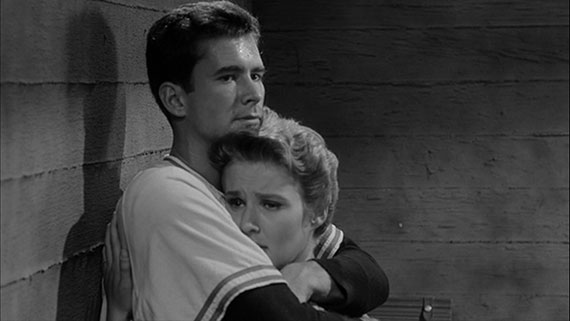
Legal Ethics Forum has a post on an intriguing article by John Lande “Escaping Lawyers Prison of Fear“. The abstract: Continue reading
Futurist: Lawyers Will Begin To Be Obsolete This Year
Karl Schroeder envisions a future where human beings have “replaced their legal system with all-knowing A[rtficial] I[ntelligences]. While this is a possibility recognized for some time (The Future’s So Bright…), Mr. Schroeder, science fiction writer and strategic foresight consultant thinks that this is the year when lawyers begin to become obsolete. Within a few decades, the primary task of our profession might well be instructing and running the justice machines. Until they get smart enough to do it themselves.

Since we are fundamentally in the information processing business, more so than all professions, Continue reading
Farewell to A Great Dissenter

Justice Joyce Kennard
As a rule, the retirement of a great jurist is always an occasion to look back at why that jurist is considered great. Justice Joyce Kennard is not an exception but could well have been one that the rule was written for. Her retirement from the high court is more newsworthy than the average Supreme Court retirement Continue reading
Jensen a Snapshot of the Discipline Times
Every so often a case will a come along that perfectly captures the state of things in a particular domain with photographic accuracy. The peculiar domain of California State Bar discipline got its snapshot this week with the publication of In the Matter of Jensen.
Attorney Jensen plead nolo to one count of misdemeanor child endangerment after he left his nine-month-old daughter in a crib in a hotel room for at least 40 minutes while he took his toddler son for a walk. The conviction was referred to the State Bar for discipline proceedings. Mr. Jensen had two prior disciplines, a 90-day stayed suspension in 2007 and a 30-day actual suspension in 2010.
Former Standard 1.7(b) provided the sanction on the third discipline “shall be disbarment” unless the most compelling mitigating circumstances clearly predominate.” The “three strikes” rule is one of those rules more honored in the breach (e.g. Arm v. State Bar (1990 50 Cal.3d 763 and many others) and was extensively revised in new Standard 1.8(b) which became effective January 1, 2014. The new Standard provides that disbarment is “appropriate” where (1) actual suspension was previously imposed (2) the new third discipline involves a pattern of misconduct; or (3) all three disciplines demonstrate an “unwillingness or inability to comply with ethical responsibilities.” Continue reading
Video: Different Perspectives on the State Bar Discipline Enforcement
Thanks to Tore Dahlin for allowing me to talk about the discipline enforcement at the State Bar.
ttp://www.youtube.com/watch?v=EiDgCHy3LGwPr
Mr. Dahlin also interviewed Prof. Robert Fellmeth, the architect of the modern discipline system. We disagree on some things but we agree on much as well.
 Kafkaesq
You must be logged in to post a comment.