Attorney Regulation, The Next Generation

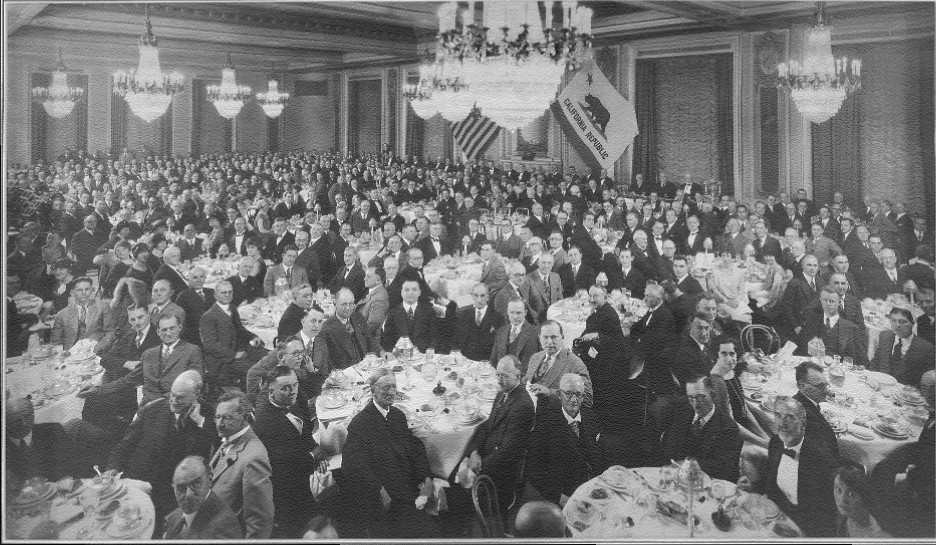
San Francisco Lawyers Celebrate the New Integrated Bar 1927

San Francisco Lawyers Celebrate the New Integrated Bar 1927

Outside the Board of Trustees meeting room at the San Francisco HQ of the State Bar of California hangs the photograph above.  It captures a the last great pivotal moment in lawyer regulation, the transfer the vast bulk of legal services regulation from the judiciary to the lawyers through the institution of the integrated bar. Note that I say legal services regulation, not lawyer regulation, and I do so for a very good reason:  in 1927 only lawyers could provide legal services.  Most of the legal services regulation not conducted by governmental entities other than the State Bar was suppression of non-lawyer providers, “regulating” them out of existence through statutes criminalizing the unauthorized practice of law. Continue reading

Chasing the Public Protection Chimera

It is axiomatic that the purpose of attorney discipline is public protection. But what does that really mean? Two recent cases from the Review Dept., one published (Smithwick) one unpublished (Missud) illuminate the certainties and the uncertainties of chasing the public protection chimera.

Flipping the truism around, we start with the ridiculous before moving to the sublime.

Missud: Trudging Through the Muck
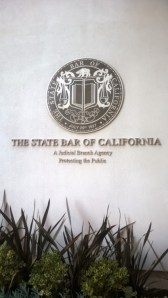
State Bar sign

The first principle, Public Protection, written in stone. It gets less certain from this point on.

Mr. Missud was admitted to the State Bar in 2002.  He will almost certainly be departing in 2015.  The Review Dept.’s decision recommends his disbarment for “egregious misconduct during his disciplinary proceeding and in connection with several frivolous lawsuits he filed from 2005 through 2011.”  The frivolous lawsuits stemmed from Mr. Missud purchase of a home in Nevada and his subsequent dispute with the builder of the home.  He was found in contempt in Nevada state court and declared a vexatious litigant in Federal Court.

Representing himself in State Bar Court, Mr. Missud litigated his own discipline case in his unique style, in my 25 years of paying close attention to discipline, perhaps the most unique, although very much in the mould of cases like Lebbos v. State Bar, or In the Matter of Dixon (Review Dept. 1999) 4 Cal, State Bar Ct. Rptr. 23 (1999 WL 562767).  The famous quote from Lebbos sets the tone:

Petitioner’s pattern of serious, recurrent misconduct is a factor in aggravation… Further, unrestrained personal abuse and disruptive behavior characterized petitioner’s conduct during the State Bar proceedings. Failure to cooperate with the State Bar during disciplinary proceedings itself may support severe discipline. It is evident that petitioner has no appreciation that her method of practicing law is totally at odds with the professional standards of this state. Disbarment is thus necessary to protect the public, preserve confidence in the profession, and maintain high professional standards.

Accordingly, we need not examine the fine points of whether counsel has the right to refer to a judge as “swine” and “asshole” when speaking to court personnel in the course of their duties…*

Continue reading

Rules of Professional Conduct: Lead, Follow or Get Out of the Way?

directionsNews of the demise of the California’s version of the Model Rules of Professional  Conduct after 14 years of effort caused many heads to explode among the ranks of our states’s ethics lawyers this week.   The implications and the issues raised by this saga are numerous but the biggest one really isn’t new at all and reaches far beyond California exceptionalism: what exactly to  do we want rules of profession conduct (writ small) to be?

Do we want them to lead, follow or get out of the way?

Lead?

Should rules of professional conduct be used to make change?  Consider ABA Model Rule 1.10, which provides for screening of disqualified lawyers.  This change, something that large law firms wanted to deal with the problem of tainted hires, was considered and rejected by the California Rules Revision Commission (RRC) largely because it would have gone where no California case had gone before Continue reading

Supreme Court Goes Old School On Revised Rules of Professional Conduct

Waybackmachine3After 10 years of effort by the State Bar of California Rules Revision Commission (RRC), and four years of dithering by the State Bar and the Supreme Court, the Court has confirmed that it will not adopt any of the RRC’s work product. The State Bar has been ordered to go back to the beginning, set up a new commission and come with a new set of Rules of Professional Conduct by March 2017.

The handwriting has been on the wall for a long time ( See New Rules of Professional Conduct: Obsolete on Arrival? Kafkaesq, February 2012.)   The project was begun under the aegis of former Chief Justice Ron George, who thought that it was important to bring California’ s rules in line with the “evolving national ethical standards” reflected in the American Bar Association’s Model Rules, especially after the ABA announced around the turn of the century, with some fanfare, that it would be looking at changes in those Rules to meet the challenges of the new millenium.   The painfully slow process of the RRC was given a kick in the pants at some point by the George Supreme Court around 2007 and revised its process to start with the ABA Model Rules format, numbering and language and work from there. Continue reading

MCLE Dragnet: Just the Facts Ma’am

The Review Dept. of the State Bar Court has granted the request of the Association of Discipline Defense Counsel and the Association of Southern California Defense Counsel for publication of the Court’s decision in In the Matter of Yee.

Yee is a case that arises out of State Bar’s annual audit of MCLE compliance, a practice that began in 2011.  The respondent in question was part of the first audit after she had affirmed her compliance with the 25 hour MCLE requirement on line on January 31, 2011.  When she was asked to provide proof, she was unable to locate her records. She completed the 25 hours required after the compliance period and paid a late fee.  In response to the State Bar’s investigation regarding her affirmation of compliance, she stated

At the time I made the affirmation, I recalled and believed that I had complied. In reviewing my records, I now believe that I made a mistake.” She explained, “I transitioned to a new job in mid-February 2009 and recall that I took classes prior to starting my new job. . . . I cannot find a record of those classes. [¶] . . . [¶] . . . [I]t is
possible that I may have confused classes that I took to satisfy the prior compliance period with
the current . . . period.” [She] acknowledged that “my records were and are lacking” and accepted
responsibility for her “error in memory and recordkeeping.”

The Office of Chief Trial Counsel argued that the respondent was culpable of intentionally misrepresenting her compliance with MCLE requirements and asked for thirty days of actual suspension.
Continue reading

A Cold Place in The Sun

Consider the following chart which presents information from 21 discipline cases tried in State Bar Court where respondents were represented by discipline defense counsel since January 2013:

OCTC Demand                         State Bar Court Trial Result
1 Disbarment                                   6 month actual
2 Disbarment                                   6 month actual
3 Disbarment                                   2 year actual suspension
4 90 day actual suspension         Dismissal
5 90 day actual suspension         Dismissal
6 30 day actual suspension         Stayed suspension
7 Disbarment                                   Public Reproval
8 2 years actual suspension        1 year actual suspension
9 6 months actual suspension     30 days suspension
10 Disbarment                                 2 years actual suspension
11 Disbarment                                 Dismissal
12 2 years actual suspension      6 months actual suspension
13 Disbarment                                 2 years actual suspension
14 1 year actual suspension         90 days actual suspension
15 Disbarment                                 18 months actual suspension
16 90 days actual suspension      30 days actual suspension
17 Disbarment                                  1 year actual suspension
18 6 months actual suspension    Public Reproval
19 30 days actual suspension      Public Reproval
20 Disbarment                                 2 years actual suspension
21 Disbarment                                 90 days actual suspension

This is only a fraction of the cases tried in State Bar Court since January 1, 2013, of course. Continue reading